A Shared Meal with Room for Conversation
A shared meal with room for conversation uses one gentle cue and a simpler hosting plan to help guests connect without making dinner feel like a performance.
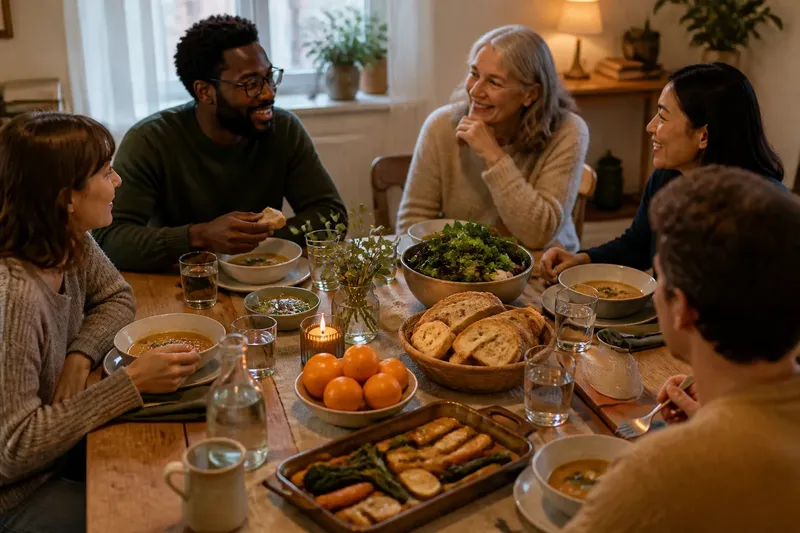
You set a bowl of soup on the table, and someone asks how the week has been. Before anyone answers, you notice the bread still needs slicing and the cups are in the cupboard. A shared meal with room for conversation does not depend on a flawless spread; it depends on making a little space for people to attend to one another.
One way to create that space is to choose a single conversational cue: a small invitation that gives the meal a point of connection without requiring everyone to take turns or disclose more than they wish. Pair it with a hosting approach that suits the group, and let the rest of dinner remain ordinary.
What can one conversational cue do?
A cue is a light prompt, a shared object or a small activity that gives conversation somewhere to begin. It can help guests who do not know one another find a thread, while leaving plenty of room for talk to wander. It is not a programme for the whole evening.
Keep the cue easy to understand and easy to pass over. A question such as “What is something small that made today easier?” invites a specific answer without asking for a life story. A loaf of bread to pass around, or a dish where everyone can choose their own portion, can also create a natural moment to speak without putting anyone on the spot.
Choose just one cue. Several prompts, planned activities and announcements can make a relaxed meal feel like a hosted exercise. Once the conversation has started, you can leave the cue behind.
Which hosting approach suits the occasion?
When does a low-effort meal work best?
A low-effort meal suits a close-knit group, a busy evening or anyone who would rather join the conversation than manage several dishes. Choose a meal that can be served with little attention once guests arrive, such as soup with bread, a tray of roasted vegetables, or a simple pasta dish with salad.
Set out water, serving spoons and any condiments before people sit down. The practical advantage is not that the meal must be plain; it is that fewer interruptions leave you freer to listen. A shared salad bowl or bread basket can double as the conversational cue, offering a natural reason to pass something along.
When is a shared-contribution meal a better fit?
Asking guests to bring something can suit a group that already enjoys contributing and has time to coordinate. Keep the request specific and optional: one person might bring fruit, while another brings a side dish. That makes the plan easier to understand than a general request to “bring whatever”.
Check in about dietary needs and explain what you are already providing, so guests can decide whether a contribution feels comfortable. This approach can widen the variety of dishes, but it also brings small coordination tasks. If someone is travelling, short on time or unfamiliar with the group, reassure them that arriving empty-handed is fine.
What if the group is new to one another?
A small seated meal with a gentle prompt can suit people who have not met before. You might invite each person to name a dish they like making, or ask what they enjoy doing on a day off. A question about a harmless preference gives people an easy starting point and lets them answer briefly.
A larger, more informal table may work better for a group with varied energy or comfort levels. People can speak in pairs, join a conversation when ready and step away without making a formal exit. If several guests are new to one another, arrange the seating so no one is isolated at the end of the table.
How should you choose a conversational cue?
Think about the people in the room, not the most impressive question you can invent. A useful cue is clear, low-pressure and suited to the occasion. Avoid prompts that ask guests to reveal private experiences, defend an opinion or produce a clever answer.
Say you are inviting two neighbours who have only exchanged greetings. You could place a small bowl of clementines on the table and ask, “What is a snack you look forward to?” The bowl gives the question a natural moment, and anyone who prefers not to answer can simply pass it along; the expected result is an easy opening, not a requirement for a lively discussion.
For friends who know each other well, a cue can be more specific: ask what small thing they have enjoyed recently, such as a recipe, a song or a place to sit outdoors. For a mixed-age family, a question about a favourite everyday meal may include children and adults alike. If the first answer leads somewhere interesting, follow that thread rather than moving on to a prepared list.
How can you keep hosting from taking over?
Choose food you can prepare without missing the beginning of the gathering. Put serving dishes and utensils within reach, and make water easy to refill. If a dish needs attention at the table, make it one that guests can help serve themselves rather than a task that keeps you moving between kitchen and dining room.
You do not need to apologise for a simple menu or explain every unfinished detail. A brief, warm welcome and a clear invitation to sit are enough. If you want help, ask one person to pour drinks or carry a bowl; a specific request is easier to accept than the vague instruction to help themselves.
Leave some room for pauses. A quiet moment does not mean the meal has failed, and you need not fill it with another question. Continue serving, listening or eating, and let someone else pick up the conversation when ready.
What questions might help you decide?
Should everyone answer the cue?
No. Offer the prompt as an invitation, not a round of compulsory turns. Guests can answer briefly, ask someone else a question or simply keep eating.
Is a conversation card useful?
A card can help if you like having a prompt ready, but one question written on a scrap of paper is just as workable. Put it aside once the group has found its own topic.
What if conversation feels strained?
Return to the meal itself with an easy, practical comment, such as asking someone to pass the bread or offering another serving. If the group remains quiet, let the meal be quiet rather than pressing for personal stories.
How do you choose between making food and asking guests to contribute?
Choose the option that asks least of the people attending. If guests are close and enjoy bringing dishes, contributions may feel natural; if the group is new or schedules are tight, a simple meal you provide may be kinder.
A shared meal with room for conversation is shaped less by what is on the menu than by the ease of being there. Pick one cue, choose a hosting plan that leaves you present, and let the evening become its own conversation. The most useful preparation may be deciding what you can comfortably leave undone.