Why a Short Walk Changes the View of a Familiar Place
A short walk along a familiar route can reveal overlooked details; learn how an unhurried pace lets ordinary streets, parks and paths come into focus.
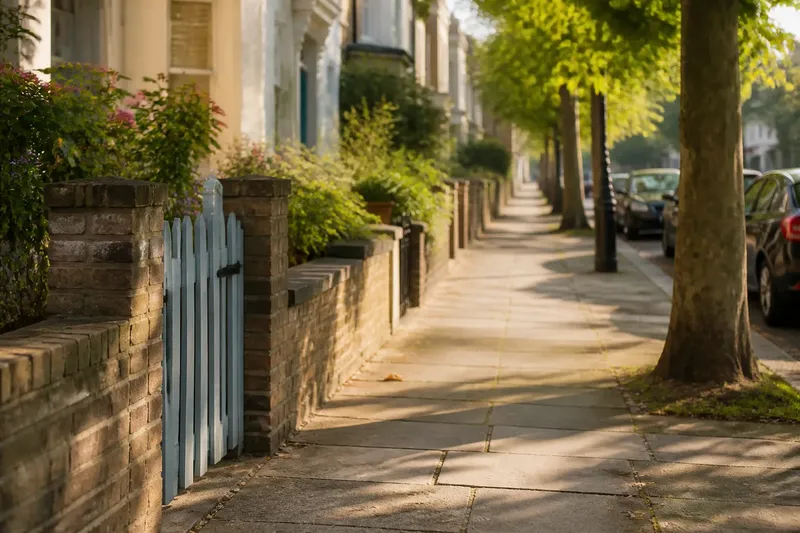
You pass the same brick wall on the way to the corner shop, usually thinking about what you need to buy. On a short walk at an unhurried pace, a pale patch of lichen, a repaired crack and the angle of a tree’s shadow may come into view. A short walk through a familiar place does not change the street; it changes how much of it you notice.
The effect is less about finding something remarkable than allowing ordinary surroundings to register. Familiar routes are often crossed on autopilot, with attention directed towards a destination. Moving more slowly gives the eyes, ears and body time to take in details that are already there.
Why can a known route feel different on foot?
When you know where you are going, you often rely on a rough mental map: turn at the post box, cross by the lights, continue past the bakery. That map is useful, but it can make the route feel like a sequence of instructions rather than a place with changing surfaces, sounds and activity.
An unhurried walk shifts attention from simply reaching the next point to moving through the space between points. You might notice that a shop doorway catches the afternoon light, or that the pavement slopes gently towards a drain. These observations are small, but they give a familiar route more texture.
Walking also brings the surroundings into view from a different pace and position than a hurried commute or a drive. A low garden wall, a window display or the sound of a gate closing can be easy to miss when your attention is fixed on keeping up or getting through. Slowing down makes room for such details without requiring a special destination.
What does an unhurried pace actually mean?
There is no required speed. An unhurried pace is one that leaves enough attention for the route, rather than making each stretch feel like a race to the next turn. You can still walk with purpose; the difference is that you are not pushing yourself to hurry.
Choose a route you know well, perhaps a block of streets, a path through a local park or the walk to a nearby shop. Let your stride settle naturally and keep your attention available to what is around you. You do not need to stop at every interesting feature or deliberately inspect the ground.
Comfort matters more than a prescribed technique. Wear footwear suitable for the surface, stay aware of other people and traffic, and use a familiar route that feels appropriate to you. Where access or local conditions matter, follow posted signs and the relevant guidance.
What kinds of details become easier to notice?
It can help to think of the route as a place with several kinds of information, rather than a view to scan for something special.
- Surface and shape: Notice changes in paving, a patched stretch of tarmac, a slope or the edge between grass and path.
- Light: Look for a shadow moving across a wall, a bright reflection in a window or a sheltered patch that looks different from the open pavement.
- Sound: Listen for a bicycle bell, birds in a hedge, a distant delivery trolley or the quiet shift in noise near a side street.
- Signs of use: A bench with a worn armrest, a gate left ajar or footprints in damp earth can suggest how people move through the place.
- Change over time: A new plant, a fresh repair or a tree losing leaves may stand out against what you remember from earlier walks.
These are prompts, not a checklist to complete. If you set yourself too many things to locate, the walk can become another task. One detail that genuinely catches your attention is enough to make the route feel newly observed.
How can you pay attention without turning the walk into a task?
Start with a loose invitation rather than a target. You might wonder what sounds are coming from the park today, or look for a feature on the route that you have never properly noticed. Then let the question go when something else draws your attention.
It can also help to alternate between looking outward and checking in with the pace of your movement. Notice the line of a roof, then the feel of the ground beneath your shoes. Listen for a nearby sound, then look at the next stretch of path. This gentle shifting keeps attention connected to the place without demanding constant concentration.
Imagine you usually hurry past a row of small front gardens on the way home. On a short, slower walk, you notice that one has a painted blue gate and another has herbs growing in pots beside the steps; the observable result is a more detailed memory of the same street, not a different route or a dramatic discovery. You might simply carry those details with you and recognise them next time.
If thoughts drift to errands or work, there is no need to scold yourself. Notice that attention has wandered, then return it to a nearby sound or surface if that feels useful. The walk can still be worthwhile when your focus comes and goes.
What if the route seems unchanged or uninteresting?
Not every walk produces a striking observation. Familiarity can remain strong, and some routes have few visible features or are busy enough that careful looking feels uncomfortable. In that case, the point is not to manufacture novelty but to give yourself a little more time to experience the place you are already crossing.
Try changing one gentle condition rather than searching harder. Walk at a different time, choose the quieter side of the street, or take a familiar path in the opposite direction. A reversed route can make landmarks appear in a new order, while a different light may bring out a colour or outline that was less noticeable before.
There are also times when the safest or most comfortable choice is to keep attention on where you are going. On a crowded pavement, near traffic or on uneven ground, watching your footing and the people around you comes first. Noticing the place can be as simple as taking in the open sky at a clear point on the route.
What questions do people ask about a short walk?
How short can a noticing walk be?
It can be as brief as the familiar stretch you already have time to walk, such as a loop of the block or the path to a local shop. The useful distinction is not a particular duration but whether you can move without rushing through the whole route.
Should I leave my phone at home?
You do not have to, though putting it away can reduce interruptions if that suits your circumstances. Keep it accessible when you need it for navigation, communication or personal safety, and avoid looking at the screen while crossing or moving through a busy area.
Is it better to walk alone or with someone?
Either can work, depending on what helps you feel comfortable and attentive. Walking with someone can bring out shared observations, while walking alone may leave more room for your own thoughts; neither is necessary for noticing the route.
Does the same route need to be repeated?
No, but returning to a familiar route can make small changes easier to recognise because you have a sense of what was there before. You can also use the idea on a new route by slowing down enough to notice its immediate details, without expecting to remember every part.
How can you let the observation last beyond the walk?
At the end, pause for a moment and recall one detail that stayed with you. Naming it privately—perhaps “the warm light on the brick wall” or “the gate that squeaks”—can help the walk settle into memory without turning it into a record-keeping project.
If you enjoy keeping track, jot a few words in a notebook or add a brief note to your phone once you have stopped somewhere safe. There is no need to photograph everything or compare walks. A small note can be useful when you want to notice how a path changes with the weather or season.
A short walk through a familiar place is most revealing when it leaves room for the unexpected. Let your pace soften, attend to one or two details, and keep moving when the route calls for it. The next time you pass the brick wall, you may recognise not only where it is, but something about how it looks today.