Quiet Time or Gentle Sound: Two Ways to Shape a Restful Pause
Quiet time or gentle sound can each support a restful pause; learn how to choose by preference, surroundings and the distraction that keeps catching your attention.
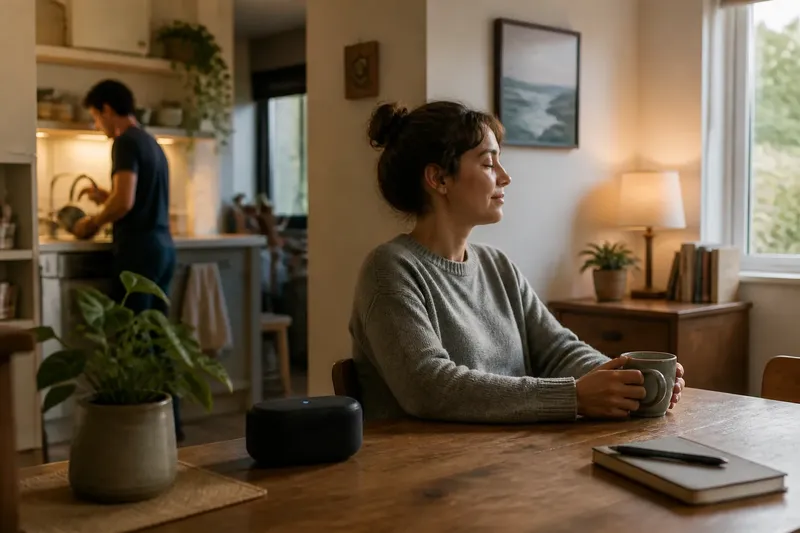
You sit down at the kitchen table, close the door and hear the refrigerator hum, a car pass and a notification buzz from the next room. Quiet time or gentle sound may both seem appealing, but neither setting automatically feels restful. The useful choice is the one that makes it easier to stop tracking what is around you for a while.
Silence here means a low-stimulation setting, not the literal absence of every sound. Gentle sound might be familiar instrumental music, a fan, soft rain audio or the ordinary rustle of a shared home. If one approach is not working, the cause may be the room, the sound itself or the expectation that a pause should feel a particular way.
Why can silence feel more distracting than sound?
When a room becomes quiet, small noises may stand out: a clock, pipes, footsteps or traffic beyond a window. Your attention can start monitoring each one, especially if you are waiting for quiet to feel a certain way. That does not mean you are bad at resting; it may simply be a poor match between the room and the pause you want.
Start by identifying the sound that keeps pulling you back into listening. If it is steady, such as ventilation, trying to cover it with a second sound may add more stimulation. If it comes and goes, like voices in a corridor, a consistent soft background sound may make those changes less prominent.
Try one small adjustment at a time. Move to a room farther from the source, close a door if that feels comfortable, or leave the setting alone and add a familiar, quiet sound. Notice whether you are less compelled to follow the interruptions, rather than asking whether the room has become perfectly quiet.
What if gentle sound keeps drawing your attention?
A sound chosen to soothe can become another thing to follow. Lyrics invite you to track words; a new album may hold your interest; a playlist with abrupt changes can keep prompting you to listen for what comes next. In that case, the problem may be the material rather than the idea of sound.
Choose something predictable and low in detail. A familiar instrumental track, steady fan noise or a simple recording of rainfall may ask less of your attention than a spoken podcast or a favourite song with a strong beat. Keep the volume low enough that the sound sits in the background instead of competing with the room.
Say you are pausing at a kitchen table while another person prepares food nearby. The starting point is that clattering pans keep catching your attention, while you still need to hear the person if they speak to you. You play a familiar instrumental track quietly from a nearby speaker; the expected observable result is that the clatter feels less distinct while the music remains easy to ignore. If you start following the melody or cannot hear the other person comfortably, turn it off and try the pause without added sound.
How can you choose a sound that fits the pause?
Match the sound to what is making the setting difficult, not to an idealised idea of relaxation. A soft, steady source can help when irregular background noises are distracting. Quiet may suit you better when sound itself feels tiring, or when you want a pause without another input to manage.
- Fluctuating household noise: Check whether voices or clattering keep pulling your attention. If they do and added sound feels comfortable, try steady fan noise; if the fan becomes another distraction, switch it off or move to a quieter room.
- Music prompts daydreaming or singing: Check whether you are following lyrics or a strong beat. If you are, choose familiar instrumental music; if you still follow the tune, pause without audio.
- A busy shared space: Check whether people regularly pass or speak nearby. If they do and another place is available, move to a quieter corner; if you need to stay put, try a low, unobtrusive sound only if it does not interfere with conversation.
- The pause feels too stimulating: Check whether the audio itself feels tiring or irritating. If it does, lower the volume or turn it off; if the room noise then becomes harder to ignore, move farther from its source.
- You are unsure what suits you: Check whether quiet or one familiar sound leaves you less inclined to monitor the room. If quiet does, use it for this pause; if steady sound does, choose that instead, and reassess when the surroundings change.
- You need to remain responsive: Check whether headphones would make nearby people harder to hear. If you must stay available, leave the headphones off or keep one ear free; if you do not need to respond and the setting allows it, headphones may be an option.
Say a person is taking a pause beside a shared kitchen while a flatmate washes dishes. The starting inputs are intermittent clattering, a need to hear a question, a phone speaker and a familiar instrumental track. They first move their chair farther from the sink, but the clatter still draws their attention; they then play the track softly and sit without checking the phone. If the music stays in the background and the flatmate remains easy to hear, they continue with it; if the tune takes over or masks speech, they switch it off and accept the quieter corner as the better trade-off.
What if you cannot settle in either setting?
Sometimes the difficulty is not silence or sound but the way the pause is framed. If you sit down expecting to empty your mind, each thought can feel like a failure and become another distraction. A short pause can instead leave room for ordinary thoughts without requiring you to pursue or suppress them.
Give the moment a simple boundary: sit comfortably, let your eyes rest on a familiar object or close them if that feels pleasant, and allow the chosen sound or quiet to be present. You do not need to count breaths, follow a recording or reach a particular mood. If a thought takes your attention, notice that it has, then return to the room or the background sound when you are ready.
If you feel restless, change only one part of the setting. You might sit somewhere more comfortable, turn off a track that has become irritating or move away from a source of conversation. Making several changes at once can leave you managing the setup instead of taking the pause.
How do you make the pause work in a shared home?
A shared room may not offer silence on demand, and playing audio can affect someone else. Treat the setting as a small negotiation rather than a test of willpower: choose a time or place that is less busy, ask for a brief quiet interval if that is comfortable, or use a low-volume sound through a speaker that does not disturb others.
Headphones can reduce awareness of nearby activity, but they may also make you less aware of people who need your attention. Use them only when that trade-off suits the situation. If you need to remain responsive, keeping one ear free or choosing quiet may be the more comfortable option.
For a pause in a workplace or public place, the environment may set limits. A library corner, an empty meeting room or a seat away from a walkway can offer a quieter setting without requiring anyone else to change what they are doing. In a busy room, a familiar low sound may be more practical than waiting for silence that is unlikely to arrive.
Which setting should you try first?
Quiet time or gentle sound is best chosen by the problem you notice, not by a fixed rule about what restful pauses should sound like. Use the questions below to narrow the choice, and treat the answer as a starting point rather than a verdict.
Should I choose silence if I want to calm down?
Not necessarily. Choose a low-stimulation setting if sound feels like extra effort, but silence is not required for a pause to feel restful. If quiet makes small noises seem more prominent, a steady familiar sound may be easier to leave in the background.
What kind of sound is least distracting?
A predictable sound with little variation may be easier to ignore than speech or music with lyrics. Try a familiar instrumental piece, fan noise or gentle rain audio, and notice whether you begin following it rather than resting alongside it.
Can I use the same setting every time?
You can, if it remains comfortable, but there is no need to keep it unchanged. Your surroundings and preferences can shift; a quiet pause may suit one moment and soft background sound another.
What should I do if neither option feels restful?
First check whether the seat, room or interruptions are the main source of discomfort. Make one modest adjustment, then allow the pause to be ordinary rather than demanding that it produce a particular feeling. If you would rather stop, ending the pause is also a reasonable choice.
How can you tell whether the setting is helping?
Look for a modest, observable difference: you may find it easier to leave a noise alone, remain seated without repeatedly checking your phone, or let your attention wander without chasing every sound. You do not need to feel serene. A pause can be useful even if it is simply less effortful than the moment before it.
Keep the decision easy to revise. Quiet time or gentle sound can each shape a restful pause, and the better fit is the one that asks less of you in the setting you actually have. If you are unsure, begin with the quieter option that feels comfortable, add a familiar sound only if the room keeps interrupting you, and remove it again if it becomes the interruption.